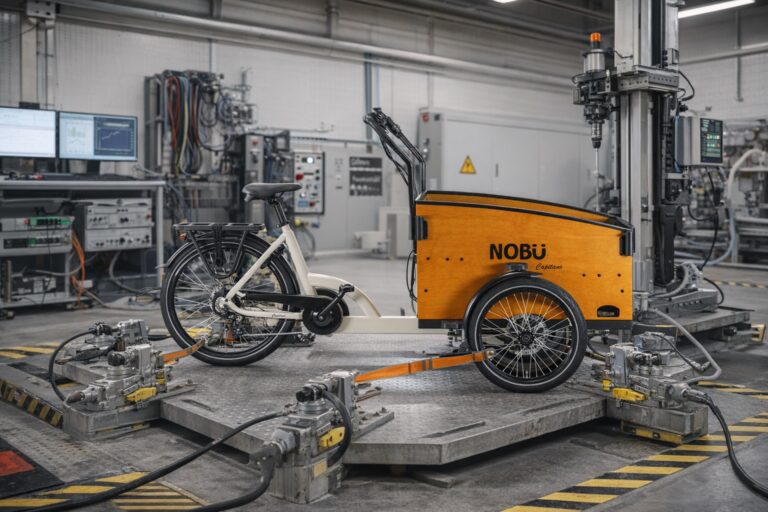
1. What Determines Cargo Bike Safety?
A safe cargo bike feels stable and predictable. You should feel in control when starting, cornering and braking.
Key factors include:
Frame stability
Braking performance
Weight distribution
Steering system design
Motor assistance control
Structural quality control
Cargo bike safety is about how all these elements work together.
When a bike behaves logically and consistently, confidence follows.
2. Three Wheel vs Two Wheel Cargo Bike: Which Is Safer?
A common question is whether a three wheel cargo bike is safer than a two wheel model.
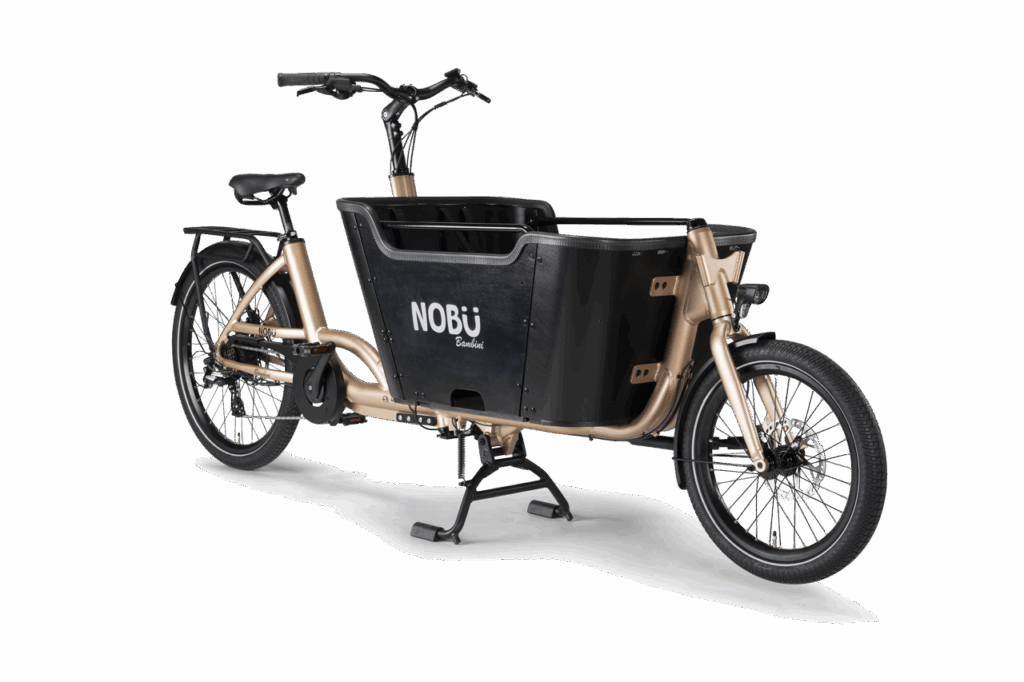
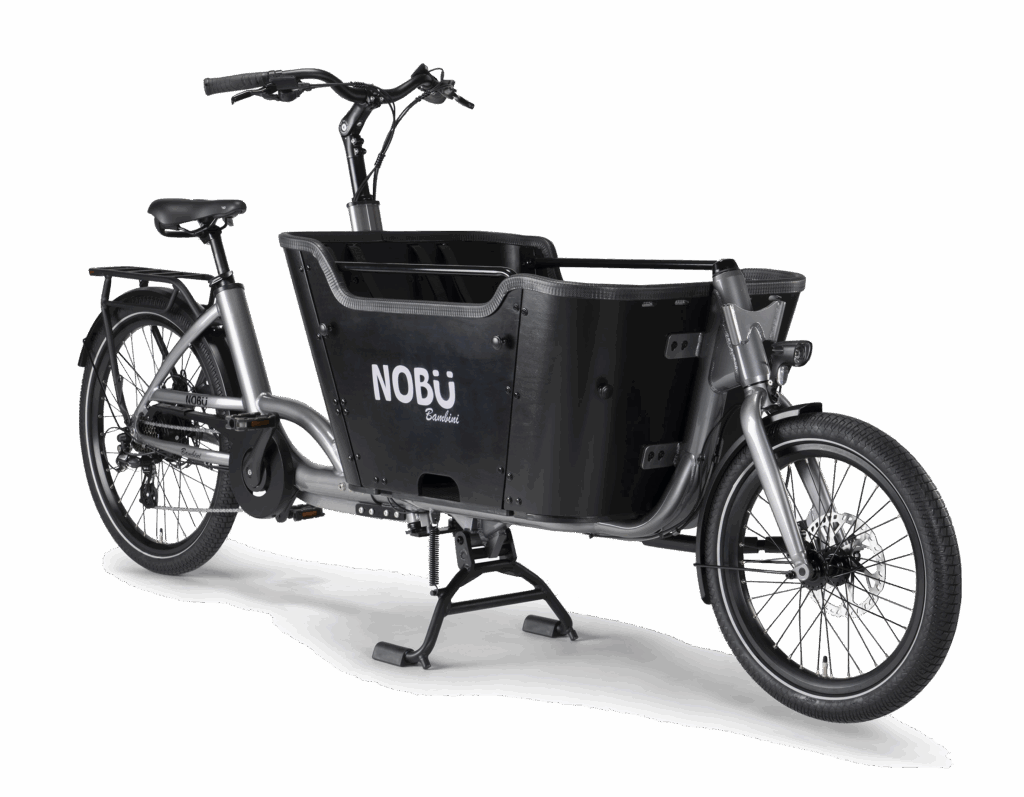
Two Wheel Cargo Bike: A two wheel cargo bike rides similarly to a traditional bicycle. It leans into corners and requires balance when standing still. For experienced cyclists this can feel natural, but carrying additional weight in the front requires adaptation.
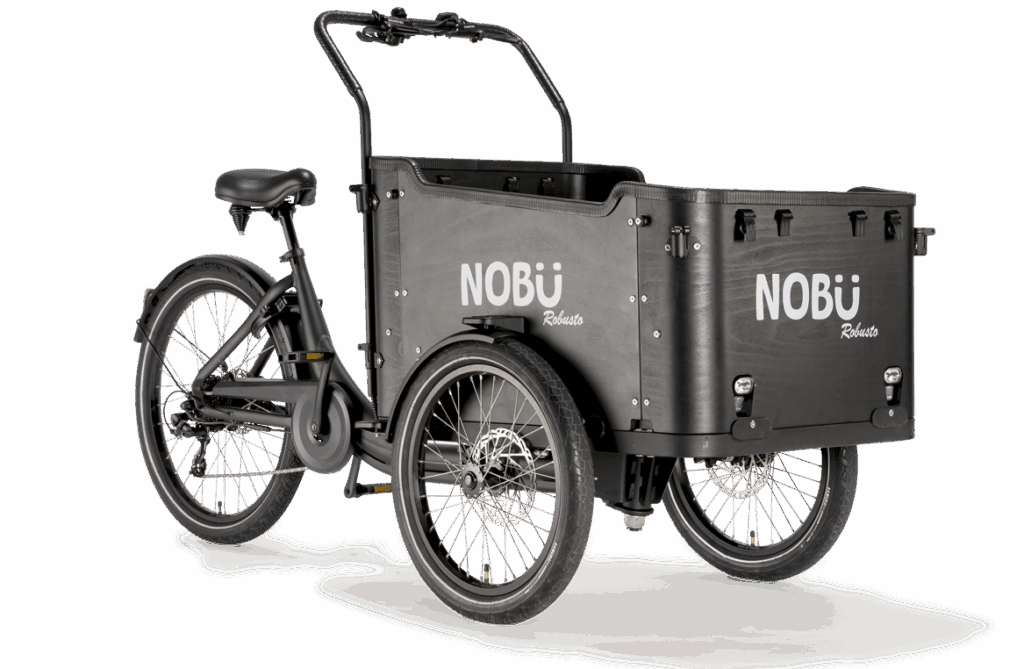
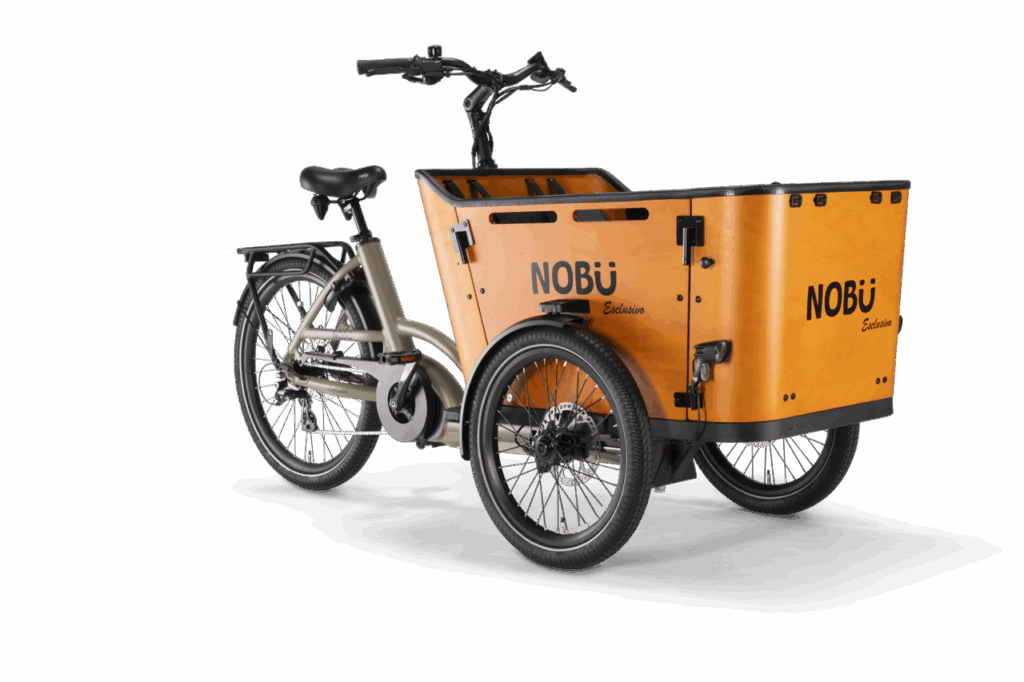
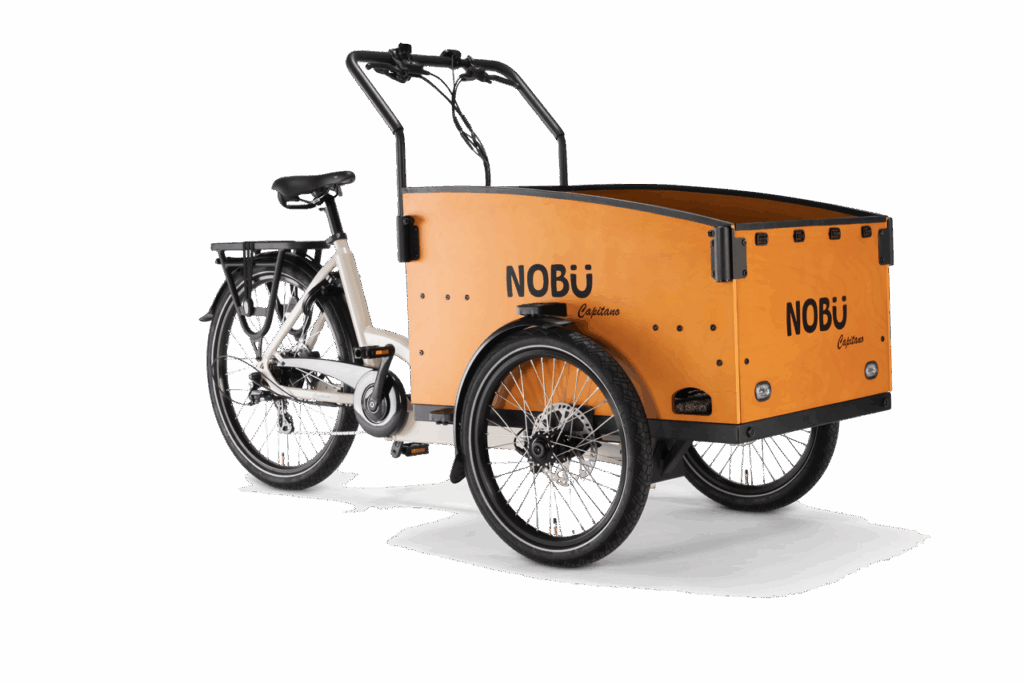
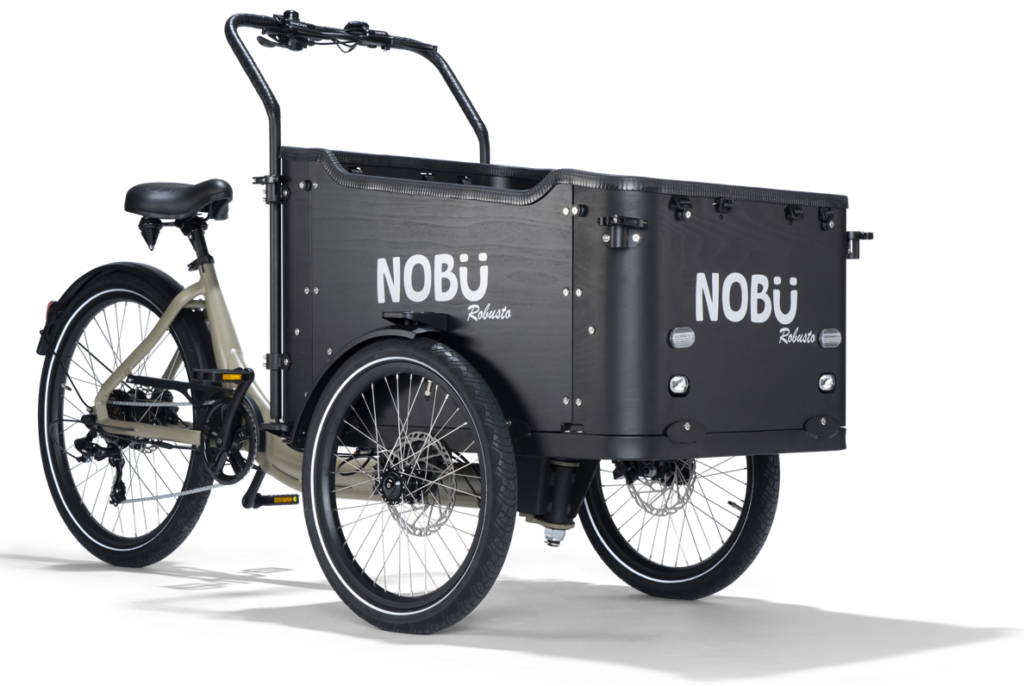
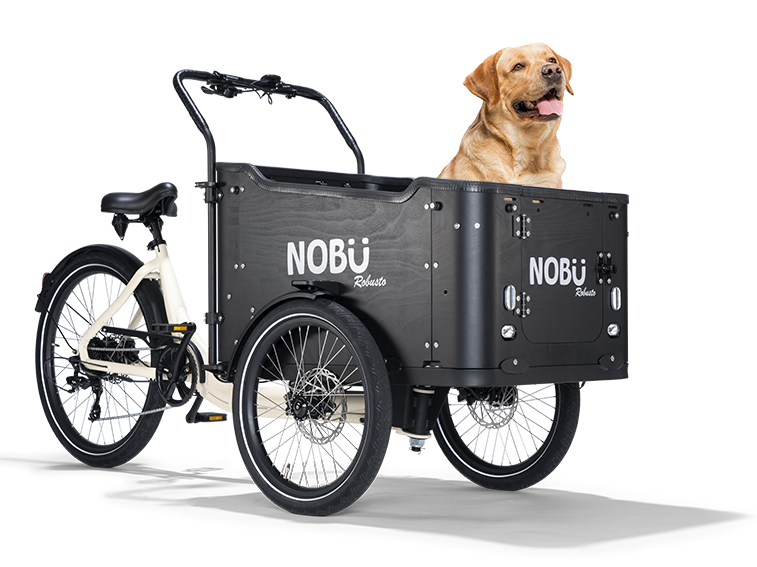
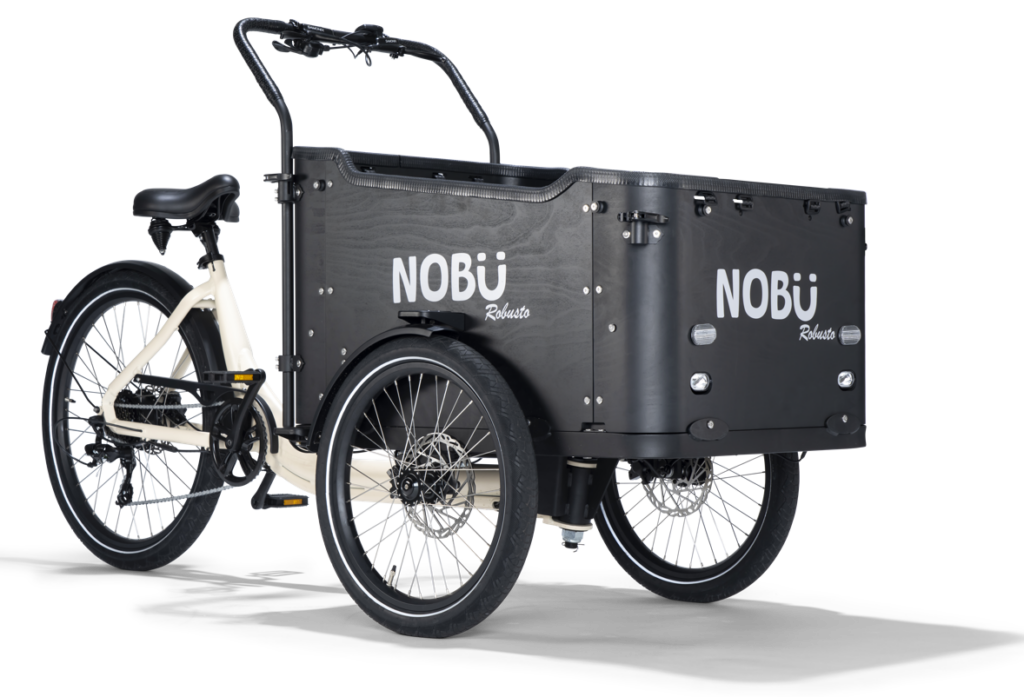
Three Wheel Cargo Bike: A three wheel cargo bike remains upright when stationary. This can provide additional stability when loading children or waiting at traffic lights. The riding dynamics differ in corners, as the frame stays upright instead of leaning.
Which option is safer depends on your situation and riding experience.
If stability at low speed and during stops is your priority, a three wheel cargo bike may offer more confidence.
If you prefer a riding feel closer to a regular bicycle, a two wheel model may suit you better.
The safest cargo bike is the one that fits your daily use and feels predictable.
3. Braking Performance Under Load
An electric cargo bike is significantly heavier than a regular bicycle. With rider, children and luggage, the total weight can increase substantially.
For that reason, braking performance is critical for electric cargo bike safety.
Hydraulic disc brakes typically provide:
Strong stopping power
Controlled braking response
Reliable performance in wet conditions
During a test ride, pay attention to:
Does the bike brake firmly but smoothly?
Does it remain stable during sudden stops?
Does braking feel predictable under load?
Braking quality is not optional. It is essential.
4. Motor Type and Riding Experience
When discussing electric cargo bike safety, people often ask: is a mid drive motor safer than a rear motor?
The short answer is: not necessarily. It depends on design, tuning and use.
Mid Drive Motor: A mid drive motor is positioned near the pedals and typically works with a torque sensor. This means the motor measures how hard you pedal and adjusts support proportionally. The riding experience often feels natural and responsive.
Mid drive systems are often considered “better” in popular opinion, partly because they are usually found in higher priced models. The price difference is mainly related to the technology and system integration, not automatically to safety.
Rear Motor: A rear motor is positioned in the back wheel and typically uses a rotation sensor. This sensor detects pedal movement and activates support accordingly. When properly tuned, a strong rear motor can provide smooth and reliable assistance.
A well engineered rear motor system is not inherently unsafe or inferior. In practice, both systems can offer stable and predictable performance when correctly configured.
What matters most for safety is:
Smooth and controlled power delivery
Predictable acceleration
Proper tuning for a cargo bike’s weight and purpose
Integration with braking and frame design
The safest choice is the motor system that suits your riding style and daily use — combined with thoughtful engineering and correct setup.
Motor type alone does not determine safety. The overall system design does.
5. Frame Construction and Weight Distribution
The frame is the structural foundation of a safe cargo bike.
Important aspects include:
A rigid and stable frame structure
Low step-through design
Thoughtful weight distribution
Durable steering linkage
Frame design is not only about appearance. It directly influences stability and handling.
A well-balanced cargo bike improves control in corners and during emergency braking.
6. Compliance with European Safety Standards
Electric cargo bikes sold in Europe must comply with applicable safety standards.
Our current models comply with EN 17860, the European safety standard specifically developed for cargo bikes.
Before EN 17860 was introduced, our models were developed and produced in accordance with the applicable frameworks at that time, including:
EN 15194 for electric pedal assistance systems
DIN 79010, the German cargo bike safety guideline
Those models met the relevant safety and electrical assistance requirements in force at the time of development.
Standards define the baseline.
Safety goes beyond compliance.
7. Compliance With Safety Standards; and What That Really Means
Electric cargo bikes sold in Europe must comply with applicable safety standards.
Our current models comply with EN 17860, the European safety standard specifically developed for cargo bikes.
Before EN 17860 was introduced, our models were developed in accordance with the applicable frameworks at that time, including:
EN 15194 for electric pedal assistance systems
DIN 79010, the German cargo bike guideline
Compliance with these standards is required to legally sell electric cargo bikes in Europe.
However, it is important to understand something essential:
A safety standard defines the minimum legal requirements.
It does not automatically guarantee long term safety in daily use.
A product can meet a standard at the time of testing and still develop problems later if:
Production consistency is not controlled
Material quality varies between batches
Design changes are not properly validated
Long term durability is not monitored
In recent years, the market has seen situations where cargo bikes were recalled or temporarily removed from sale due to safety concerns. These situations underline an important point:
Compliance is the starting point.
Ongoing responsibility lies with the manufacturer.
At NOBÜ, safety does not stop at certification.
We implement structured internal processes to:
Validate prototypes before production
Monitor batch production consistency
Evaluate safety relevant components over time
Continuously assess models throughout their lifecycle
For every safety critical element — frame, steering system, braking system and electric assistance — we apply controlled procedures to ensure consistency and reliability.
This level of process control is essential in a market where price pressure can sometimes lead to shortcuts.
A visible certification label is important.
But long term safety depends on how seriously a manufacturer manages quality after that label has been obtained.
Safety is not a one time test.
It is an ongoing responsibility.
Conclusion: Is an Electric Cargo Bike Safe?
An electric cargo bike can be a safe and practical way to transport children — when it is properly designed, responsibly produced and correctly used.
True cargo bike safety depends on:
Stable frame construction
Reliable braking performance
Controlled motor assistance, whether mid drive or rear motor
Thoughtful weight distribution
Compliance with recognised safety standards
Consistent production quality
Ongoing manufacturer responsibility
European standards such as EN 17860 define the legal foundation for cargo bikes. But certification alone is not the full story.
Long term safety depends on how seriously a manufacturer controls design, production consistency and lifecycle quality management.
A safe cargo bike is not defined by a label, a motor type or a price category. It is defined by engineering discipline and structural responsibility.
When those elements are in place, an electric cargo bike becomes what it is meant to be: a stable, practical and trustworthy solution for everyday family life.